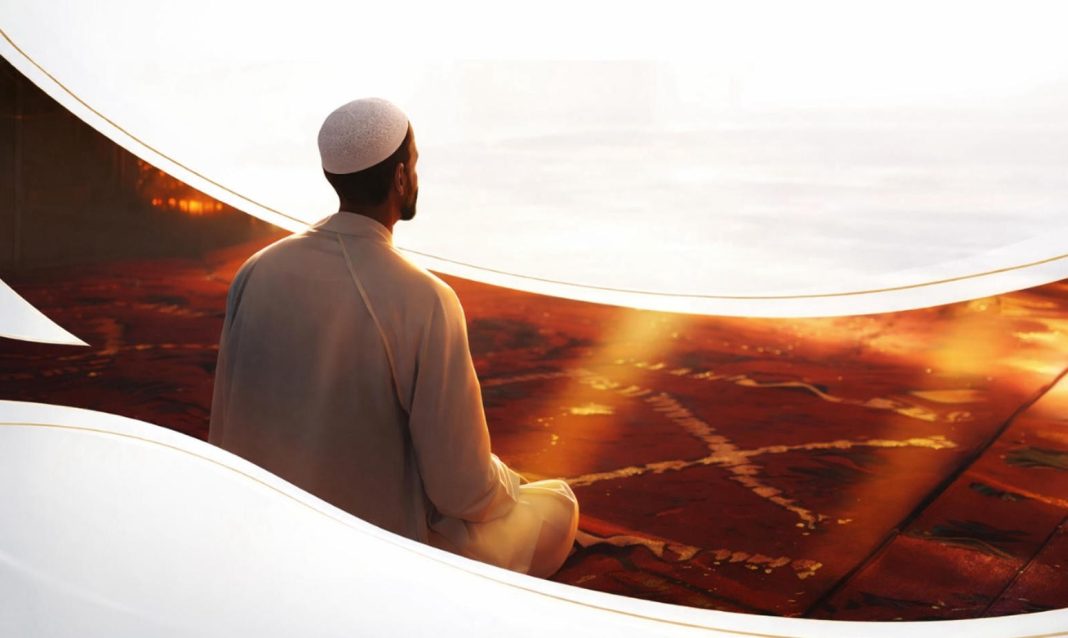
Ramadan is often described as the month of fasting, Qur’an, and prayer. Yet at its core, it is a month of revival, not merely of ritual practice, but of the human heart.
In an age marked by distraction, emotional fatigue, and spiritual restlessness, many believers struggle not with disbelief, but with numbness. The crisis is not always visible. Outwardly, practices may remain intact. Inwardly, however, the heart (al-qalb) may feel distant, hardened, or inattentive. Ramadan arrives as a divine intervention in this condition.
The Qalb in the Qur’anic Paradigm
In Islamic thought, the heart is not simply a metaphor for emotion. It is the spiritual centre of perception and moral consciousness. The Qur’an repeatedly addresses the heart as the central place of guidance and deviation.
Allah says: “Indeed, in the remembrance of Allah do hearts find rest.” (Surah Ar-Ra’d 13:28)
True tranquility (itmi’nan/Sakeenah) is therefore not psychological alone. It is spiritual. It is rooted in dhikr, a conscious return to Allah.
Similarly, Allah asks: “Has the time not come for the hearts of those who believe to be humbled to the remembrance of Allah and what has been revealed of the truth?” (Surah Al-Hadid 57:16)
Classical scholars explain that this verse was revealed as a gentle admonition to believers whose hearts had begun to harden. The rhetorical question: “Has the time not come?” echoes across generations. It speaks as urgently today as it did then.
Spiritual Hardness in a Modern Context
The hardening of the heart does not occur overnight. It develops gradually through heedlessness, unchecked ego, unresolved resentment, and excessive attachment to the ephemeral.
In a hyper-connected world, constant stimulation often leaves little room for reflection. Noise replaces contemplation. Performance replaces sincerity. Comparison replaces gratitude. The result is subtle spiritual fatigue.
Ramadan disrupts this pattern. Fasting weakens physical appetite and exposes inner dependency. Hunger becomes a teacher. Thirst becomes a reminder of human limitation. In withholding from what is permissible, the believer reclaims mastery over what is harmful. Thus, Ramadan is not deprivation, it is recalibration. Ramadan is not about losing something. It is about realigning the heart with its true purpose.
The Prophetic Insight on the Heart
The Prophet Muhammad ﷺ said: “Indeed, in the body there is a piece of flesh; if it is sound, the whole body is sound, and if it is corrupted, the whole body is corrupted. Verily, it is the heart.” (Sahih Bukhari & Sahih Muslim)
This Prophetic statement establishes the heart as the axis of ethical and spiritual life. Reform, therefore, must begin internally. Ramadan provides the optimal conditions for such reform: Increased exposure to the Qur’an, structured prayer at night, collective spiritual momentum, a heightened awareness of accountability. These elements collectively soften what has hardened.
Pathways to Revival
Revival (ihya’a) is not dramatic. It is often quiet and deeply personal. It may begin with: A sincere repentance uttered in solitude, a prolonged sajdah marked by vulnerability, the decision to forgive without recognition, engaging the Qur’an not as recitation alone, but as address.
When Allah revives barren land with rain, it responds gradually. Seeds long buried begin to stir. Likewise, the human heart, though covered by layers of distraction, retains the capacity to awaken.
Allah is Al-Muhhayi: The Giver of Life. The One who brings life to earth after its death (Surah Ar-Rum 30:19). Spiritual revival is not self-generated; it is divine.
Beyond Ritual: Toward Transformation
If Ramadan ends without inward transformation, its essence has not been fully realised. The objective is not exhaustion from activity, nor spiritual display. It is humility, consciousness, and return.
A revived heart manifests in: Increased sincerity in worship, gentleness in speech, patience in conflict, trust in divine decree. Such transformation extends beyond Ramadan, shaping character long after the month departs.
Winding-Up
Ihya’al-Qulub is not an abstract ideal. It is the central promise of Ramadan. The month does not merely pass through time, it passes through hearts. Some remain unchanged. Others awaken. The question posed in Surah Al-Hadid remains: Has the time not come?
Perhaps this Ramadan is not about adding more to our schedules, but about returning to what has always been central: a heart alive with remembrance, softened by humility, and anchored in Allah.
Nida Ifteqar Hashmi is a reflective writer, passionate about exploring faith, identity, and emotional healing through an Islamic lens. Her work weaves personal growth with Qur’anic insight, aiming to inspire hearts to return to Allah.
~By Nida Ifteqar Hashmi